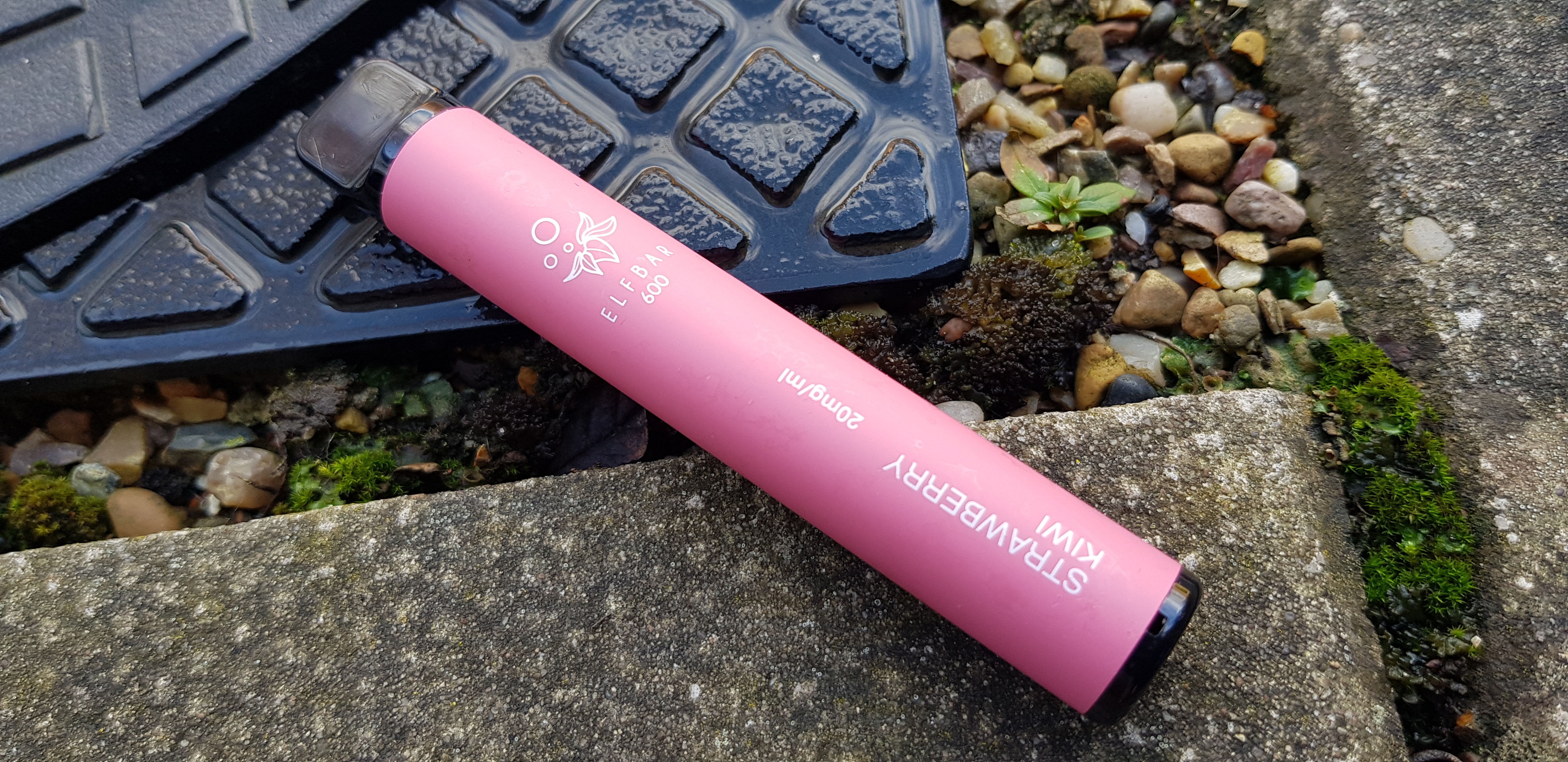
In January 2024, the UK government announced a ban on disposable e-cigarettes, primarily out of concern for the health of young people. The decision should also address the huge amounts of waste created by the burgeoning trend in the use of single-use vapes. UK vapers currently discard more than 5 million disposable vapes each week, with their built-in lithium-ion batteries. That means every year we are throwing away enough lithium for around 5,000 electric vehicle batteries!
Disposable vapes are more user-friendly than re-usable ones, which need to be charged up and filled with pods or liquid, while disposables are sold ready to use. Single-use vapes are also more stylish, cheaper and more freely available. According to research by e-waste campaign group Material Focus, UK vapers were buying 7.7 million of them each week in 2023, double the amount purchased in 2022.
Unsustainable by design
Fundamentally unsustainable by design, these plastic devices allow users to inhale sweet, nicotine-laced vapour a few hundred times before throwing them away. Vapes were originally conceived to provide tobacco smokers with a ‘healthier’ option, but vape producers seem to have lost their way. Lost Mary, one of the biggest disposable vape brands in the UK, has stated that part of its mission is “leading the way in fashion”.
The UK National Health Service advises that vaping is not risk-free. The vapour still contains small amounts of chemicals, including nicotine, and the long-term health implications are not fully understood. Yet significant numbers of vapers – especially young people – are not former smokers, but going straight into vaping. Indeed, brands have been actively promoting vapes to children with fruity flavours and colourful packaging. A 2023 survey by ASH (Action on Smoking and Health) revealed that by 2023, 20.5% of children had tried vaping, up from 13.9% in 2020.
Re-chargeable batteries in a single-use product
Each disposable e-cigarette is powered by a small lithium-ion battery. Lithium is a precious metal essential to the green transition (including electric vehicle batteries and wind turbines) and it is already generating global concerns around supply, or at best, cautious optimism.
Most disposable vapes contain a rechargeable battery but no charging port and have to be discarded once the battery runs down. Yet, according to a 2023 study by University College London and the University of Oxford, these batteries could be used and recharged over 450 times if there was a charging port! Using a re-chargeable battery in a single-use product just doesn’t make sense.
A disposable vape battery contains only around 0.1g lithium. But it all adds up, when over 5 million are being thrown away each week. That equates to around 10 tonnes of lithium ending up in UK landfills or waste incinerators each year, lithium that could be used for electric vehicle batteries or to support the green transition in other ways.
Producers and retailers not meeting existing legal obligations
The UK Vaping Industry Association says that vapes can be recycled. A spokesperson for Chinese brand Elfbar – the UK’s most popular disposable vape brand – said it was “fully committed to increasing rates of recycling“, by working to put recycling points in retail outlets and increasing product recyclability.
Yet according to Material Focus, only 17% of vapers said that they recycle single-use vapes, with 73% throwing them away, 3% dropping them on the ground, and 1% flushing them down the toilet (especially young people who don’t want their parents finding out).
It is already illegal in the UK for under-18s to buy vapes, but retailers appear not to be monitoring the age of their customers, given the high numbers of young people freely buying vapes.
Every shop that sells disposable vapes is also already obliged by UK law to take them back to recycle, but most retailers fail to do so. Vapes are not easy to recycle. They require dedicated bins containing vermiculite to reduce the risk of fires and special recycling facilities where they are dismantled by hand.
It would cost around £200m annually to recycle all the vapes used in the UK, but producers, importers and retailers are failing to stump up the money. This means the burden of dealing with the waste now falls on already over-burdened local authorities.
‘The horse has bolted’
The UK ban on disposable vapes will be welcomed in some quarters. Councils in England and Wales have already called for a ban, and Scotland has already been considering one.
Yet some experts are not so sure that a ban will work. There is already a thriving illicit market in disposable vapes and the anti-smoking charity ASH believes a ban would ‘turbo-charge’ illegal sales, increasing the risk that children would be able to buy them.
Alternative solutions include increasing taxes on disposable vapes and strengthening controls on imports and sales, making packaging less colourful and flavours less tempting. Some countries, including the US, Denmark and the Netherlands, have outlawed flavours altogether, but research suggests that this leads to more people smoking cigarettes instead.
Too little, too late?
Along with the ban on disposable vapes, the UK Government also proposes to reduce the range of flavours of regular vapes and introduce plain packaging. But is this all too little, too late?
The wastage inherent in the design of single-use e-cigarettes is not the only wastage of resources, such as lithium, essential to the green transition. Disposable vapes themselves contain other valuable metals, such as copper. And vapes are just one product in a growing mountain of electrical and electronic waste. The volume of valuable metals that are currently being hoarded or landfilled could be worth around £370m to the UK economy annually.
The UK government clearly sees that there is a problem to be addressed. Yet while announcing this new ban on disposable vapes, the government is not acknowledging that key legislation already in place to tackle the same problem is not being adequately enforced. This does not inspire confidence that they will be more effective this time around.