Batteries for electric vehicles, wind turbines, mobile phones, computers – these users of critical raw materials (CRM) are everyday items, and demand is growing. But there are a lot more uses for CRM, especially in well-established industries. Unless Western economies reduce their consumption very substantially, more CRMs are needed. In particular, Western countries, because of decarbonisation policies and high levels of consumption, want to ‘go green’, aiming at reducing CO2 emissions with lowered fossil fuel use, as agreed in the Paris Agreement and establishing the EU’s European Green Deal policy.
Established industries also need to be included in CRM demand forecasts
The data for how much more production is needed until 2050 is illustrated in the European Commission’s Joint Research Centre (JRC) 2023 report (Carrara et al. 2023) and identifies those raw materials where production needs to significantly increase in order to meet the low-demand (LDS) and high-demand (HDS) scenarios. JRC calculated the global and European demand for 2030 and 2050 for a number of technologies. These include 5 ‘strategic sectors’ (renewable energy; e-mobility; energy-intensive industry; information, communication, digital technologies; aerospace, and defence) and 15 technologies such as Li-ion batteries, fuel cells, electrolysers, wind turbines, solar photovoltaics and heat pumps.
However, the development of other sectors in the future – such as chemical industries, construction, infrastructure, steel production, just to name a few – has not been taken into account in the JRC report. These sectors should not be neglected, because they still dominate world demand.
How are CRM produced and why is there a problem with their provision for industry?
A lot of CRM used in strategic sectors are by-products of conventional mining. For instance some of the less known metals like germanium, tellurium, indium and gallium are not extracted in specific mines, but accompany copper and zinc exploitation. Germanium and tellurium are used for photovoltaics, gallium for electronic semiconductors, and indium is needed for TV and mobile phone screens. Nowadays, almost two billion(!) mobile phones are produced every year. This is quite a striking number considering a world population of around eight billion people. So called rare earth elements (they are 17 such as lanthanum, cerium, neodymium and dysprosium, just to name the most important ones) are used for laser technology, wind turbines, magnetic resonance scanners (e.g., in medicine), soot particle filters for factories and cars, or floodlights in football stadiums and much more. For renewable energy technology terbium and dysprosium make 70% of the overall CRM demand as they are used for wind turbine manufacture, for example.
The rise of lithium-ion batteries requires also increasing amounts of graphite
Lithium, an element on everyone’s lips, will dominate the e-vehicle market in the mid-term future, since new battery technologies like electrolyte-based solid-state battery cells or sodium-based batteries are still in the development stage or have less favourable characteristics than currently common lithium-ion batteries.
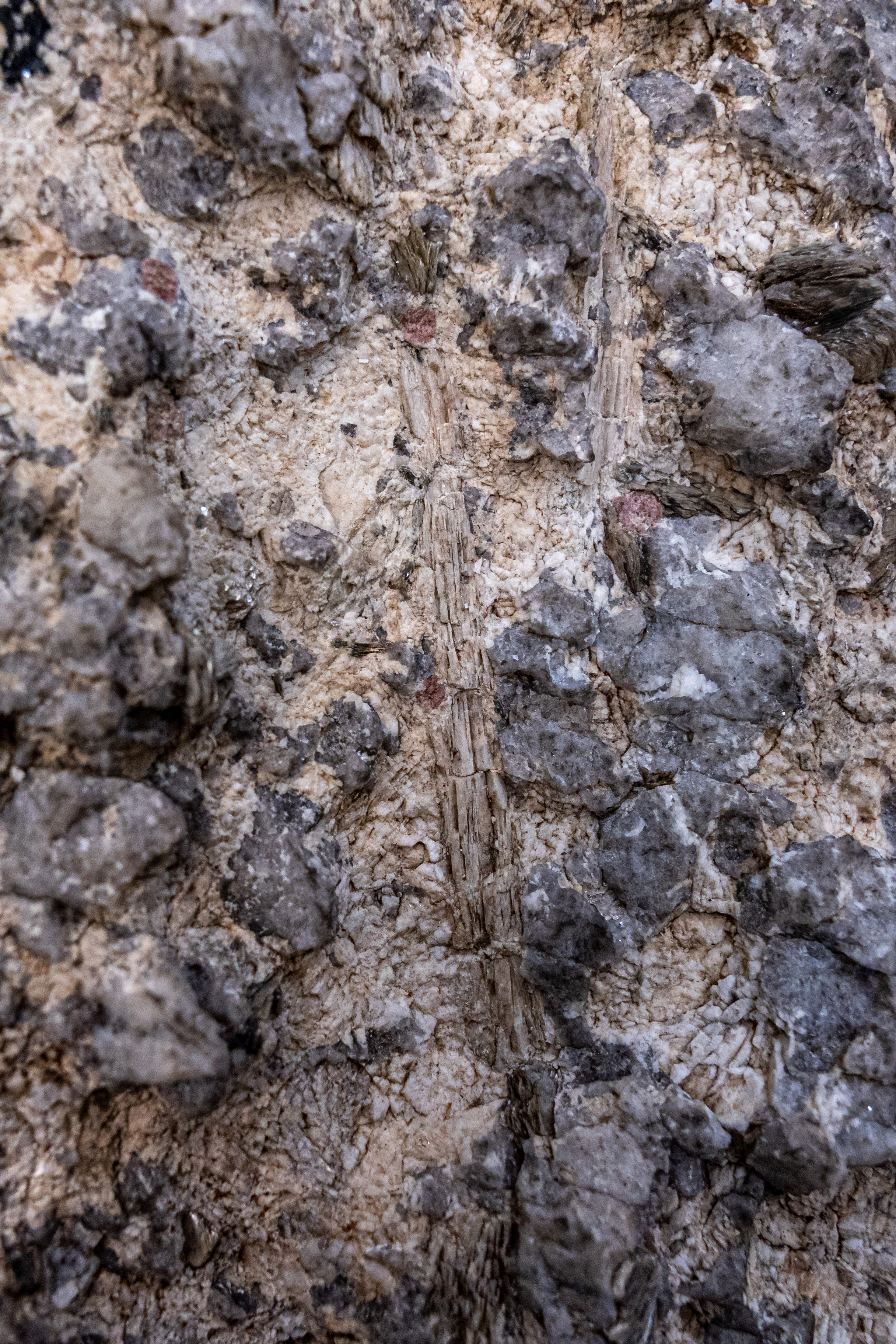
For batteries, however, significant amounts of graphite are needed. The production of lithium and graphite would need to be increased by 15% annually for the next 10 years at least, but this has its hurdles. For graphite, just to illustrate, five to ten new mines would need to go into operation every year in order to reach a production of somewhat between 2.3 and 2.9 million tons of graphite, up from 1 million tons in 2020. To meet future demands in the battery sector for lithium, the current quantity of around 12,300 tons/year needs an addition of 15,000 to 20,000 tons/year on top each year until 2030.
The demand in the EU, US and China together will increase about ten-fold in 2030 compared to 2020. This would require a dramatic increase in total lithium production from currently under 100,000 tons per year to 250,000 to 300,000 tons in 2030. Considering the lag in production times for new mines, a decade can easily go by. For the case of lithium and graphite, is meeting its estimated demand realistic?
Tricky alternatives to more new mining ‘for going green’
Today, half of the production of lithium-ion batteries uses artificial graphite. This is produced from residual crude oil products. This technology is highly intense in energy consumption and has a problematic CO2 footprint. Not least, recycling of batteries – being a fundamental part of the European Green Deal policy – has not yet had a substantial effect: it is complex in terms of technology and costly, and thus, so far of limited economic interest to the industry. A significant quantity of recyclable batteries will only be reached by 2030; and recycling, again, is highly energy intensive.
Thus, we face a tricky situation in ‘going green’. It is obvious that the use of batteries for e-mobility is so far everything else but sustainable, and does not hold up the spirit of a ‘green transition’.