MAY 12, 2025
By Emilka Skrzypek, Department of Social Anthropology, University of St Andrews, & Nick Bainton, Australian National University and Sustainable Minerals Institute, University of Queensland
A rapid transition to renewable energy-systems is now the prevailing solution to our planetary problem. Building these new energy-systems will, however, require vast amounts of minerals and metals. This much is well known, and governments and the extractive industries are now desperately trying to source these materials and capitalise on the latest resources boom. Much less is known about the contradictions and risks that will accompany this particular solution to climate change. Could our solutions to the climate crisis make things worse? If so, for whom?
To explore those questions, we decided to take a critical look at the relationship between the extractivist pressures of the energy transition and the impacts of climate change in the Pacific. This is a part of the world acutely exposed to the dual pressures of extraction and climate change. It’s also a part of the world that is deeply important to both of us. Over the past twenty-five years or so, we’ve both carried out long-term ethnographic fieldwork on the impacts of the extractive industries in Pacific countries. In the process we’ve been privileged enough to get to know many people and places throughout the islands. This has given us an intimate understanding of the distressing ways in which daily life-rhythms are affected by extraction. This same grounded knowledge prompted us to ponder what these patterns might look like at a larger scale.
Extractivism, climate change and the Pacific
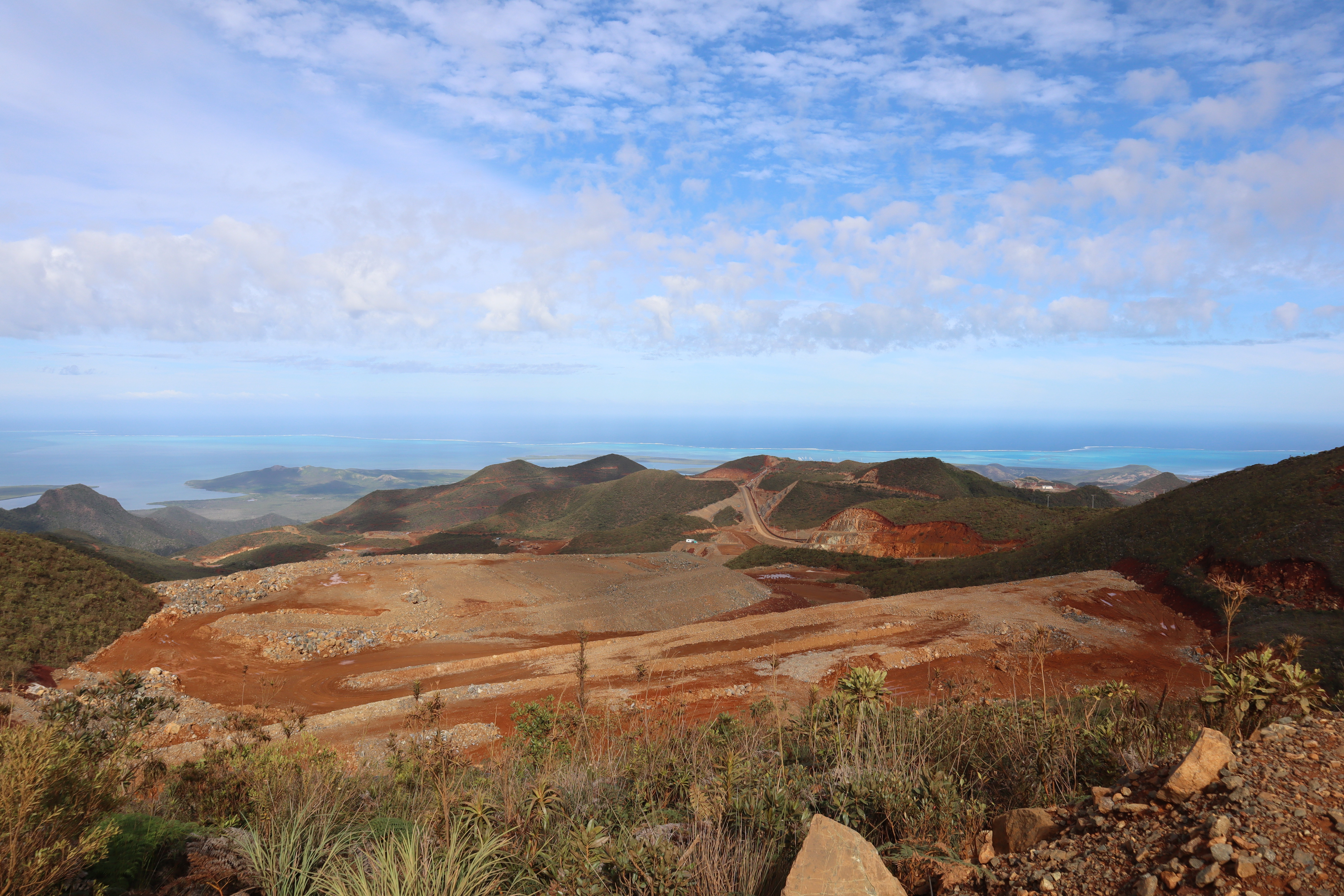
The Pacific is known to hold rich repositories of the minerals and metals needed for energy transition technologies. Stretching from the east coast of Australia to the West coast of America, the Pacific is comprised of some 22 ‘small island developing states’ – or ‘large ocean island states’ as most Pacific Islanders prefer to see them. The colonial legacies of the region are deeply entwined with various forms of extractivism, and, unsurprisingly, many Pacific nations are now heavily dependent on the extractive industries. These activities have caused environmental devastation, social degradation, and complex patterns of harm.
Against this backdrop of extractive capitalism climate crisis now looms large. Pacific leaders and communities have long and loudly sought to hold the global community accountable for causing the crisis, and demanded that world leaders to act to stop the world from overheating. The global response is an energy transition – a metal and mineral intensive exercise that seeks to replace fossil fuelled energy systems with supposedly ‘cleaner’ renewable energy technologies and infrastructures.
This solution is largely based on the same extractivist logic that fuelled colonial and post-colonial plundering of Pacific resources – a logic that also caused the climate crisis by providing fossil fuels for hungry global markets and burgeoning industrial economies. In this case, the cause of the problem is rebranded as the core solution. The underlying logic suppresses attention to the broader patterns of hyper-consumption in our modern lives that demand access to ever-increasing levels of energy and raw materials. In effect, the idea of an energy transition is premised on maintaining the status quo rather than reordering our lives and our relationship with the natural environment.
Compound exposure
To fully understand the localised impacts of these global pressures, it is important to understand what we refer to as situated vulnerabilities – factors that influence capacity to respond to change in the places where these extractive projects can be found. So, we turned to our colleague, Dr Éléonore Lèbre,for help. She had been working on similar questions and problems at a wider scale, and had developed a global dataset of some 5097 mining projects and the social, environmental and governance risks surrounding these projects.
We asked if we could isolate a subset of this data for the Pacific region. We identified some 163 projects in the Pacific that were extracting or projecting to extract minerals and metals needed for the energy transition. We then mapped these projects against numerous environmental, social and governance vulnerabilities in locations where these projects are located. We added climate modelling data to consider how these vulnerabilities are likely to be affected by changing environmental conditions. Although our analysis looked at 23 distinctive areas of vulnerability, it became evident that they not only co-exist but converge and compound under extractive pressures – often leading to new patterns of risk and harm.
What emerged from our analysis was a picture of risk and vulnerability around these mining projects that was higher in the Pacific than compared to the global average. These situated vulnerabilities will be exacerbated by the pressure to extract under changing environmental conditions. Which in turn will influence Pacific countries’ capacity to respond to the combined shocks and stresses of extraction and climate change – and their capacity to secure a prosperous future.
Thinking through the dynamics of climate change and extractivism in the Pacific, we developed the concept of compound exposure to draw attention to the contradictions in the dominant solution to climate change. Namely, that this same solution also contributes to climate change and influences local responses to environmental hazards, thus compounding the effects of a changing climate. And whilst there are very few places in the world that feel the urgency of climate action more than the Pacific Islands, we expect that extractive pressures and perils will converge with the impacts of climate change well before the transition to renewables kicks in and reduces climate threats.
Given this dilemma, how do we prevent regions such as the Pacific becoming sacrifice zones or poorly regulated regional quarries supplying the rest of the world with raw materials in the name of a global climate solution?
So, what now?
Action on anthropogenic climate change is desperately needed. We are not suggesting otherwise. But as the world pursues an energy transition, there is a need for greater scrutiny of the relationship between global warming scenarios, changes across various forms of vulnerability, and the future geography of resource extraction.
We think there is a need for greater coordination around the supply and use of natural resources, in ways that are sensitive to regional circumstances. The type of analysis we have conducted helps to identify resource-rich regions that are more likely to experience compounding forms of exposure if there is a rush for their resources.
This, in turn, opens up important questions. For example, what are the critical tipping points at which the combination of extractive effects, climate impacts and embedded vulnerabilities create a failed state or a series of regional failures? Is it possible to meet global resource requirements without exploiting the most vulnerable regions in the world? And on what basis might it be determined that some regions should be excluded from exploitation?
Answering these kinds of questions will require the development of novel data infrastructures and the building of effective institutions capable of dealing with increasing levels of complexity. It will also require more cohesive policy and planning processes that link global climate solutions with local and regional risks – by considering the differences and interdependencies between them. The point being that the extractive solution to the climate crisis works to lock us into knowing less at a time when we urgently need to know a lot more.
As extractive companies court Pacific leaders and seek access to their resources in the name of a global climate solution, we need to ask who stands to gain the most from these arrangements and who has the most to lose. The current situation highlights the need for careful policy positions that consider how extractive activities simultaneously support and undermine sustainable development goals and the capacity and capability to manage and adapt to climate change.
To learn more about this topic you can watch the BhA Lecture #2 by Emilka Skrzypek titled Compound Exposure in the Pacific: Can we mine our way out of the climate crisis? at the University of Vienna, AT.
This blog post is based on the recent paper (2025) ‘Compound exposure: Climate change, vulnerability and the energy-extractives nexus in the Pacific’ co-authored by Nick Bainton (ANU), Emilka Skrzypek (St Andrews) and Éléonore Lèbre (UQ) and published open access in World Development: https://doi.org/10.1016/j.worlddev.2025.106958.
Contact:
Emilka Skrzypek – ees7@st-andrews.ac.uk
Nick Bainton – nick.bainton@anu.edu.au