JULY 14, 2026
By Emma Wilson, ECW Ltd., UK & Associate of Austrian Polar Research Institute (APRI)
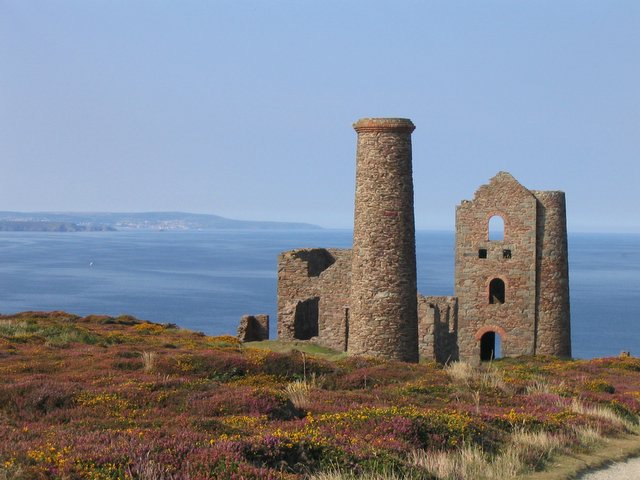
With its beautiful coastline and quaint fishing villages, Cornwall – in the far south-west of England – is a popular holiday destination. The region is also defined by its proud mining heritage – recognised today with UNESCO World Heritage status. Cornwall’s landscape, towns and identity have been shaped by centuries of extraction – notably copper and tin. Thriving mining towns grew up around tight-knit mineworker communities – who themselves often suffered poor living standards, harsh working conditions and environmental damage, while fabulous wealth was generated for business-owners. The industry declined from the late 19th century, owing to overseas competition and a fall in demand for tin, with the last mine – South Crofty – closing in 1998.

Today, with increasing demand for critical raw materials (CRM) in the UK there is a renewed focus on domestic production in line with the UK Critical Minerals Strategy. Cornwall has been identified as an emerging CRM cluster in the UK government’s Modern Industrial Strategy. Developers are starting to look again at Cornwall’s mineral resources, in particular lithium, tungsten, copper and tin. This revival may even see South Crofty re-launch the commercial extraction of tin.
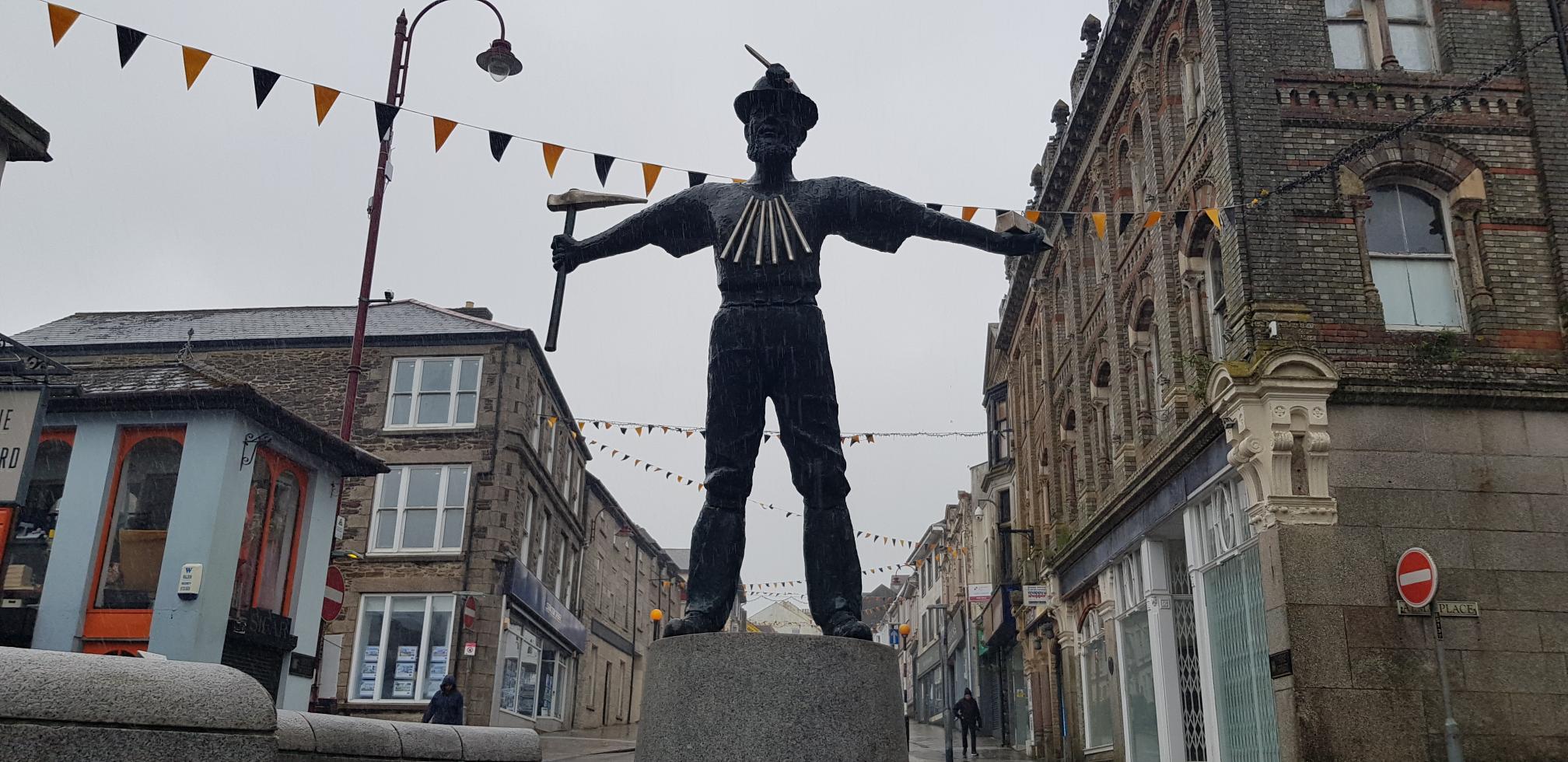
Despite this renewed interest and potential for investment, Cornwall’s old mining heartlands are struggling economically (pdf), even while towns such as Redruth still display the solid architecture and air of civic ambition that mining wealth once created. At the same time, visitors to Cornwall are struck by the vibrancy and creativity of local society. Cornwall has long attracted artists, environmental campaigners and people seeking alternative ways of living. There is an independent, slightly off-beat culture that continues to thrive.
If Cornwall is to experience a mining revival, an important question emerges: How can Cornwall’s creativity and civic energy help address the region’s economic challenges and ensure that the next wave of mining is socially and environmentally sustainable?
This question was at the heart of a workshop held in Redruth in June 2026, organised by an interdisciplinary research team from the University of Leeds, combining two projects: Unlocking the UK’s Critical Mineral Potential and Stories from the Subsurface. The event brought together local civil society organisations (such as the Red River Rescuers), academics, consultants and educators, mining companies and the Cornish Chamber of Mines. Discussions focused on the opportunities and challenges associated with mining in Cornwall, with emphasis on meaningful community engagement, especially in the earliest stages of development. A key goal of the workshop was to train local groups to produce participatory films that capture diverse perspectives on mining and the region’s future.
I was invited to the Redruth workshop as one of several external speakers to share experiences from elsewhere to stimulate discussion. My contribution focused on the earliest stages of mining development, long before any minerals are extracted. To illustrate the importance of these early decisions, I drew on a case study from northern Sweden.
Can Cornwall learn anything from northern Sweden?
The Swedish project I discussed has yet to begin commercial extraction, but it has already generated years of controversy and conflict. While the dispute centres on a specific mining proposal, it reflects a much broader issue: the failure of the Swedish state to adequately recognise and address the concerns and rights of Sámi reindeer-herding communities. The Swedish context is of course very different from Cornwall, with a strong focus on Indigenous rights. Yet the wider lessons are equally relevant to mining projects affecting non-Indigenous local communities.
Rather than focusing solely on the company involved, I examined the roles of government and local authorities, highlighting several missed opportunities for meaningful community engagement.
For instance, an early public consultation on the local land-use plan focused on potential wind energy projects – a valid discussion area, but this meant a lack of public dialogue on mining’s potential role in the area at a crucial time. Subsequently, an exploration licence was issued to the company with minimal public engagement. This prompted strong public opposition when the company sought to initiate consultation around test mining, as many local people already felt excluded from the decision-making process.
Despite the municipality’s later efforts to facilitate citizen dialogues on mining, municipal councillors made a formal statement in support of the project that did not capture the diversity of local views. Ultimately, when the Swedish government granted the exploitation licence, it failed to acknowledge the significant opposition from the Sami community, instead making the award of the licence contingent on the company engaging meaningfully with the Sami reindeer herders as part of their subsequent application for an environmental permit.
The Swedish case provides several wider lessons for Cornwall and other mining regions:
- First, a lack of strategic public debate at the level of national resource strategies or local area plans means that positions may already have hardened by the time project-specific engagement takes place. This makes meaningful consultation at later stages almost impossible. Public debate becomes polarised between proponents and opponents, with few trusted actors able to occupy the middle ground and facilitate constructive discussion.
- Second, governments and local authorities often fail to take ownership of public engagement processes, especially in the crucial early stages of development. Instead, public engagement responsibilities are delegated to companies – who in turn frequently delegate them to consultants or lawyers. Yet the most important questions concern land rights, public priorities, competing visions of development and the distribution of benefits and impacts. These are inherently political discussions that governments cannot simply outsource.
- Third, regulatory agencies often lack the required skills and expertise to make complex planning decisions. They often work at cross purposes, focusing narrowly on specific land-use types, protection regimes or licencing processes. When different agencies pursue different objectives, opportunities for constructive collaboration between agencies are often missed. This creates confusion and undermines public trust in government regulation.
- Fourth, early-stage development is often led by junior exploration companies, who tend to be small organisations with limited expertise and resources and a short-term outlook. Community engagement may be treated as a procedural requirement or an act of persuasion, rather than a genuine process of relationship-building. This undermines the potential for relationships to be built and local knowledge to be incorporated into decision-making. Exploration companies also tend to be too small to be subject to obligations under the EU’s Corporate Sustainability Due Diligence Directive (pdf).
Building blocks for meaningful engagement
The Swedish case study emphasises the importance of effective safeguards being embedded in decision-making processes very early on. The process of securing the environmental permit comes after the granting of the exploitation licence, when the company feels it has the green light for development. This turns the related environmental impact assessment and public engagement into just another hurdle, rather than a process of establishing whether the project should go ahead or not. The case also highlights the limits of sustainable financing instruments (pdf) and the voluntary environmental and social standards (pdf) adopted by mining companies. Project finance-related safeguards and certification initiatives (pdf) often come into play long after trust has been won or lost in the local arena.
This means that national and local government actors have a crucial role in ensuring meaningful community engagement in the earliest stages of development, not only in terms of setting the rules for companies but also in terms of direct engagement with affected parties. Governments need to meet their own obligations under international law, including the Aarhus Convention on Access to Information, Public Participation in Decision making and Access to Justice in Environmental Matters, the core international human rights conventions, and Indigenous rights instruments, such as ILO Convention 169 on Indigenous and Tribal Peoples and the UN Declaration on the Rights of Indigenous Peoples.
The example from Sweden also underscores the fact that meaningful public engagement is not a single event. It needs to take place at multiple stages among different stakeholders at different levels – nationally, regionally and locally. I developed the following figure (see Figure 1) for my presentation in Cornwall to illustrate the ‘building blocks’ required to ensure meaningful engagement and consultation in mining:

It’s worth noting that over the years, many diagrams and figures have been developed to illustrate public engagement and consultation, so Figure 1 is not meant to be definitive or unique, but was intended merely to illustrate the points made in my presentation!
In Figure 1, the role of government agencies and local authorities is crucial especially in the four foundational blocks: (1) Skills, capacities, resources and information (e.g., communities are fully informed and prepared; decision-makers – in government and industry – have the required skills to engage and respond); (2) Recognition of rights (e.g., land rights, Indigenous rights, minority rights); (3) ‘Taking on’ responsibilities (e.g., governments and industry meeting their legal and moral obligations to protect and respect human rights); and (4) Strategic public debate and consultation, including on government plans and programmes for mining, prior to issuing licences.
Figure 1 makes a distinction between ‘engagement’ (ongoing relationship-building and interaction) and ‘consultation’ (targeted engagement with the purpose of influencing a specific decision, process or action). Project-level engagement needs to start early and continue throughout the project lifecycle, and should be based on mutual respect, understanding and empathy, with internal (e.g., within the company) and external (community, wider public) feedback loops to identify and resolve issues and encourage positive engagement. Targeted project-level consultation might be led by government entities and/or private companies, and should involve a pre-consultation phase to mutually agree consultation principles and goals (e.g., ‘what is a good outcome?’) and agree on a ‘good faith’ process that is considered fair by all participants.
Future public engagement in Cornish mining development?
The Swedish case study resonated with workshop participants in Cornwall, although the Cornish context is, of course, very different. Cornish land and mineral rights are complex, fragmented and embedded in hundreds of years of history. Cornwall has a distinctive mining heritage that remains a source of local pride. At the same time, local people are well aware of mining’s historical environmental impacts and social inequalities, and want to avoid repeating past mistakes.
One of the most encouraging aspects of the workshop was the wealth of experience present among local civil society participants. Concerns about environmental protection sit alongside an emphasis on ensuring that any benefits generated by mining do not bypass local communities, and do not come at too great a cost locally – as has been the case in other mining regions worldwide.
Participants recognised the need to strengthen the capacity of local authorities to enable informed and transparent decision-making. Participants became very enthusiastic when discussing how Cornwall might host a broader public conversation about mining and its future. Approaches such as citizens’ juries and other deliberative processes could help to ensure that difficult decisions are informed by a genuine understanding of the full range of local perspectives.
If Cornwall is indeed entering a new mining era, the foundations matter. The buildings of Redruth stand as reminders of an earlier period of mineral wealth. The challenge now is to build something different: not only new mines, but also the democratic structures, public conversations and community relationships needed to ensure that any future development is both socially legitimate and widely beneficial.
Find out more about Cornwall’s mining heritage and mining transitions here:
- YouTube video: Cornwall and West Devon Mining Landscape World Heritage Site (13mins07), also available via the Cornish Mining World Heritage website
- YouTube video: The closing of South Crofty (BBC Spotlight, 4mins43)
The Redruth workshop was co-funded and supported by Geosolutions Leeds.
Read a University of Leeds blog post about the workshop
Read more about the University of Leeds ‘Stories from the Subsurface’ project
Download the University of Leeds report ‘Unlocking the UK’s critical mineral potential: Identifying and overcoming non-technical barriers in the domestic critical mineral sector’ (2026) by Laura Smith, Alice Owen, Taija Torvela and James Van Alstine
Contact:
Emma Wilson – emma.wilson@ecwenergy.com
Contribution from BhA editorial team: Gertrude Saxinger (Uni Graz & Austrian Polar Research Institute APRI), Marlene Auer (Uni Vienna & Graz)